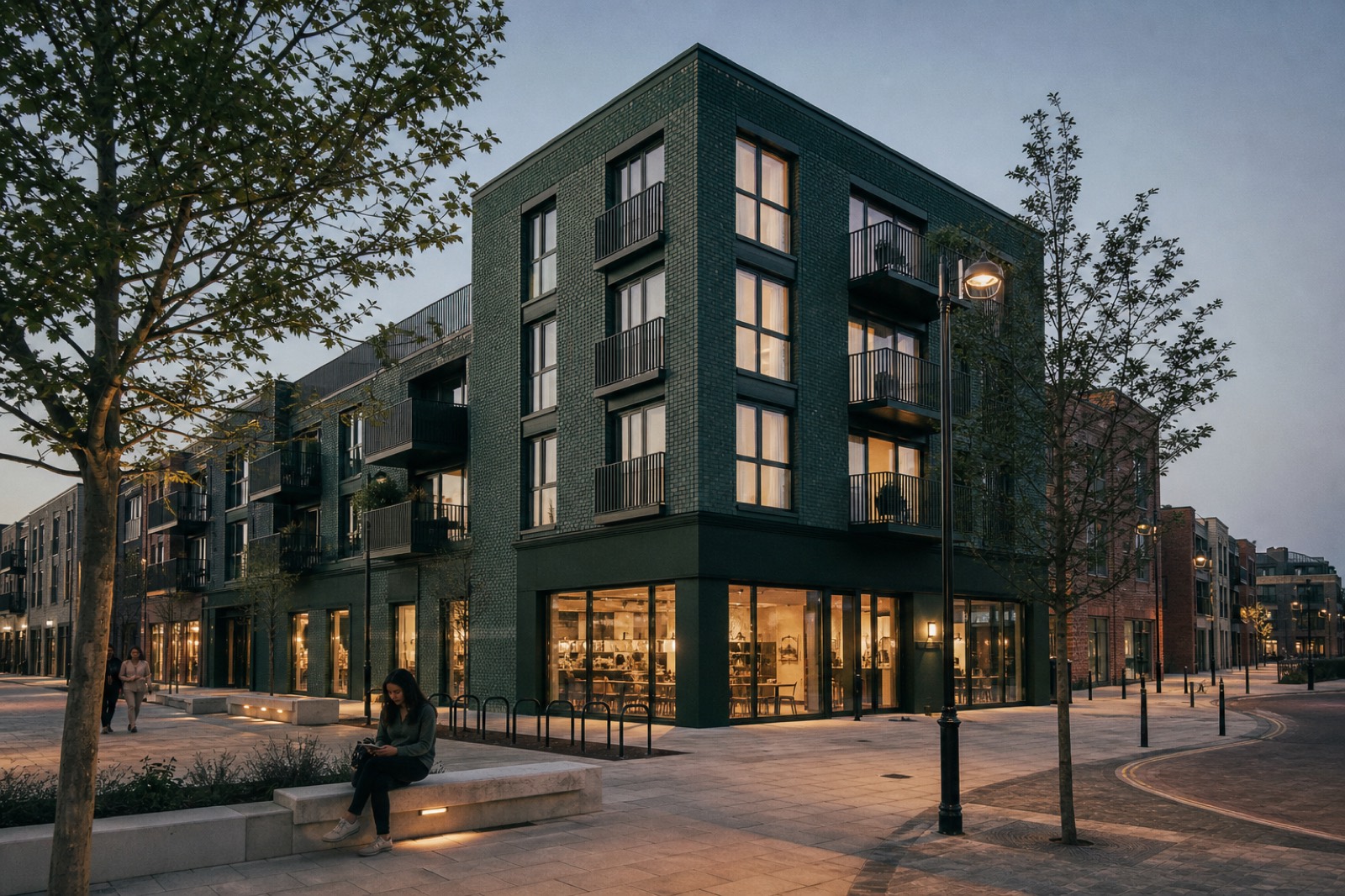
Live/work unit finance
Finance for a live/work unit combining commercial workspace and residential living under one consent.

Financing live/work units
A live/work unit combines commercial workspace with residential living in a single property, usually under a planning consent that requires part of the floor area to be kept for business use. They are common in former industrial buildings, canal-side conversions and new urban schemes, and they appeal to makers, designers and small businesses who want to trade and live in one place. Because the consent ties commercial and residential use together, the unit is a mixed-use property funded with a semi-commercial or mixed-use mortgage rather than a plain residential one.
We are a finance arranger and introducer, not a lender, and we cover the full range for this asset: a term mortgage to hold or to live and work in, bridging to buy quickly or at auction, light or heavy refurbishment finance to fit out or convert the unit, development finance for a larger conversion or new live/work scheme, and bridge-to-let to refurbish then term out onto a mortgage. The live/work planning condition is central: lenders need to understand what proportion must remain commercial, whether the unit can be occupied wholly residentially, and how that affects resale. The case can be an owner-occupier deal, where you live and work in the unit, or an investment held for rental income, often through a limited company. The split between the live and work elements shapes both the lender choice and whether the asset is treated as semi-commercial or buy to let.
Configurations we finance
- Converted industrial or warehouse live/work unit
- New-build live/work unit in an urban scheme
- Studio or workshop with integrated living space
- Investment live/work unit let for rental income
Indicative terms
- Indicative rate6.5 to 8.5% a year
- Owner-occupier rate6.0 to 7.5% a year
- Loan to valueUp to 70 to 75% of value
- Deposit25 to 30%
- Key factorLive/work planning condition
Indicative only. Terms vary by lender, property and borrower and are not an offer of finance.
How we fund a live/work unit
For an owner-occupier living and working in the unit we test a term loan on a blend of business affordability and personal income, typically to 70 to 75 percent loan to value with a 25 to 30 percent deposit and rates from 6.0 to 7.5 percent where the deal is owner-occupied. For an investment unit let for rental income we size on the rent at an interest cover ratio of around 125 to 140 percent at 6.5 to 8.5 percent, often held through a limited company. Where a purchase must complete fast or is bought at auction, semi-commercial bridging at about 0.70 to 0.95 percent a month carries it to a term refinance. Where the unit needs fit-out or conversion before occupation or letting, light or heavy refurbishment finance funds it, a bridge-to-let facility runs the works and the term loan together, and a larger conversion or new live/work scheme is funded by semi-commercial development finance on a loan to cost and GDV basis. The live/work planning condition is the pivot: lenders want clarity on the commercial proportion required and how readily the unit lets or sells under that condition.
Lender appetite for live/work units
A narrower but real field of specialist lenders funds a live/work unit, including Shawbrook, InterBay Commercial, Together and Cynergy Bank, because mainstream residential lenders are wary of the planning condition. Lenders look closely at the live/work consent, the proportion that must stay commercial, and the local rental and resale market for these units. A unit with a flexible consent, a clear commercial-to-residential split and evidence of demand attracts the better terms, while a restrictive condition that limits residential use narrows the field.
Exit and refinance options
A live/work unit is usually held and refinanced at term end, with an owner-occupier moving onto a semi-commercial remortgage and an investor refinancing on the rent. Where the planning condition can be varied or removed to allow fuller residential use, that can lift the value and open a residential refinance, sometimes returning significant equity. Where a unit is bought and fitted out before letting or occupation, semi-commercial bridging can fund the purchase and works before a term loan takes over.
Finance structures that suit this sector
- Mixed-use mortgageFor a unit blending commercial and residential use on one consent.
- Owner-occupier semi-commercial mortgageWhere you live and work in the unit yourself.
- Semi-commercial investment mortgageFor a unit held for rental income, often via a limited company.
- Semi-commercial bridgingFast or auction purchase, or fit-out before occupation or letting.
- Bridge to let financeRefurbish the unit, then term out onto a mortgage on one plan.
- Semi-commercial development financeFund a larger conversion or new live/work scheme on a loan to cost and GDV basis.
Finance a live/work units
A view on lenders and likely terms within one working day.
What drives a live/work unit's value
A live/work unit blends commercial workspace and residential living under one consent, and the planning condition shapes both the value and the lender field. Lenders weigh the proportion that must stay commercial, the local rental and resale market, and how readily the unit can be occupied, then stress an investment let at an interest cover ratio of around 125 to 140 percent. A flexible consent lifts the value, while a restrictive one that limits residential use narrows demand and depresses it.
Indicative live/work unit rates
We arrange semi-commercial and mixed-use mortgages on a live/work unit from 6.5 to 8.5 percent a year for an investment, often through a limited company, and 6.0 to 7.5 percent for an owner-occupier living and working in the unit, to 70 to 75 percent loan to value with a 25 to 30 percent deposit over 5 to 25 years. Fit-out before letting can run on semi-commercial bridging at 8.5 to 11 percent a year.
Frequently asked questions
What is a live/work mortgage?
A live/work mortgage funds a unit that combines commercial workspace with residential living under a single planning consent. Because the consent ties the two uses together, it is arranged as a semi-commercial or mixed-use mortgage rather than a standard residential one.
Can I get a residential mortgage on a live/work unit?
Usually not while the live/work planning condition stands, because the unit is not wholly residential. Specialist lenders fund it as semi-commercial. If the condition is later varied to allow full residential use, a residential refinance can become possible.
Can a limited company hold a live/work unit?
Yes. Investors commonly hold a live/work unit let for rental income through a limited company, and specialist semi-commercial lenders accept that structure. You should take your own tax advice on the company route.
Is buy to let still worth it for live/work units?
Live/work units can offer attractive yields where demand from makers and small businesses is strong, but the planning condition limits the tenant pool and the lender field. We assess each unit on its consent, location and rental evidence before placing it.
Financing a live/work units?
Tell us about the property and we will come back with a view on lenders and likely terms.