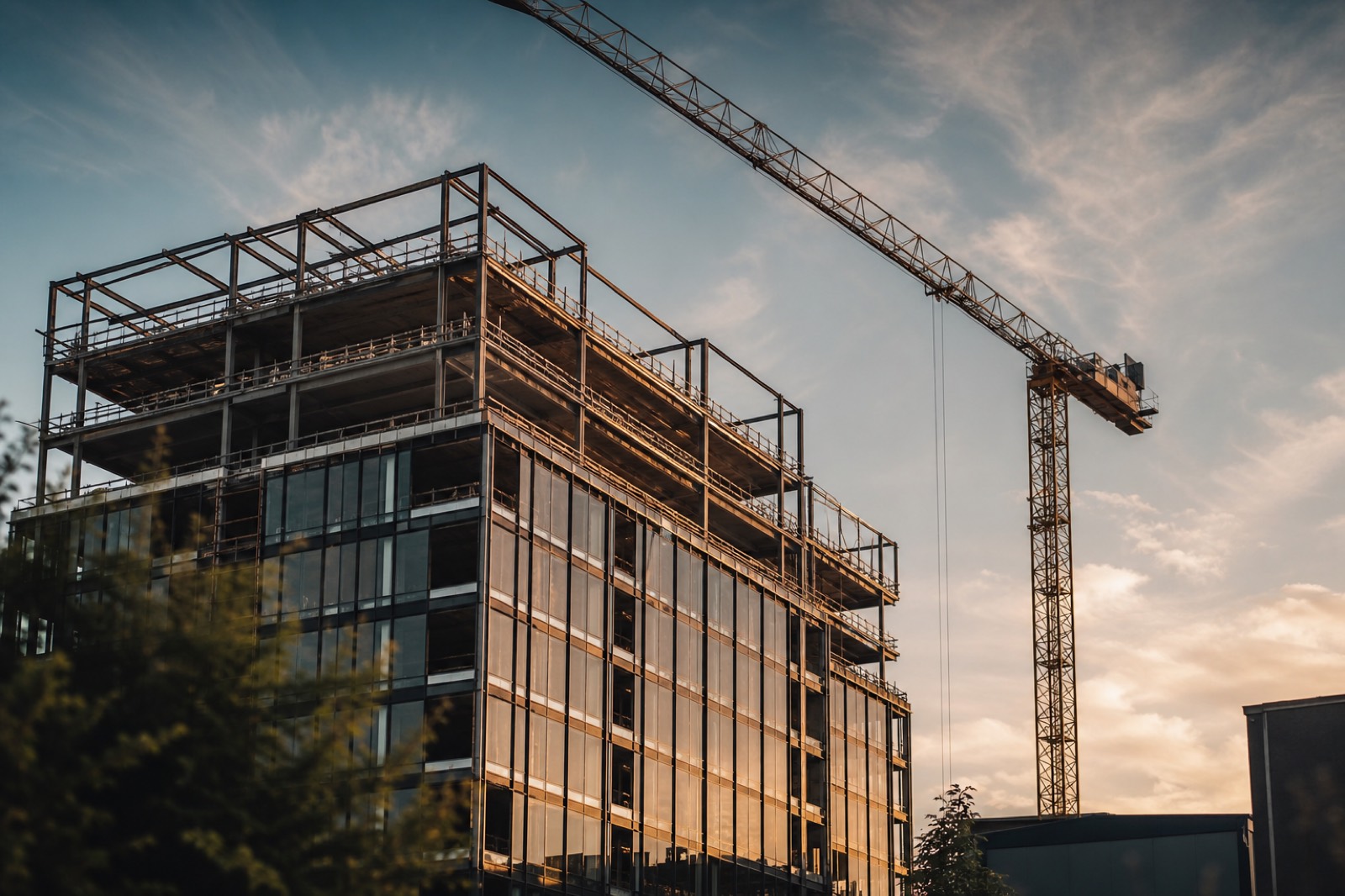
Semi-commercial development finance
Funding for conversions and small mixed-use development, from turning upper floors into flats to building out a mixed-use scheme, sized on loan to cost and gross development value.
What semi-commercial development finance is
Semi-commercial development finance funds conversions and small mixed-use development: converting the upper floors of a commercial building into flats, extending a building to add residential units above retail, or building out a modest mixed-use scheme. It is short-term finance for a project that creates or substantially adds to the residential and commercial space, rather than just refurbishing what is already there. The loan is drawn down as the build progresses and repaid on completion.
Development finance is sized differently from a mortgage. Lenders look at the loan to cost, the share of the total project cost they will fund, and the gross development value, or GDV, the value of the finished scheme once built and let or sold. Both figures cap the loan: a typical facility funds up to around 65 to 70 percent of cost and up to around 60 to 65 percent of GDV, whichever is lower. Funds are released in stages against a monitoring surveyor's inspections as the work is done.
We are a finance arranger and introducer, not a lender. Development finance on a scheme held for business or investment is unregulated lending, outside the FCA's regulated mortgage perimeter. Where an individual will personally occupy a completed residential unit, regulated rules can apply and we refer those cases to a regulated firm.
- Funds conversions and small mixed-use development
- Sized on loan to cost and gross development value (GDV)
- Up to around 65 to 70 percent of cost
- Up to around 60 to 65 percent of GDV
- Drawn in stages, repaid on completion by term or sale
Indicative terms
- Loan to costUp to ~65 to 70% of cost
- Loan to GDVUp to ~60 to 65% of GDV
- RateAbout 0.70 to 0.95% a month (indicative)
- TermTypically 9 to 24 months
- DrawdownStaged against inspections
- ExitTerm refinance or sale
Indicative only. Terms vary by lender, property and borrower and are not an offer of finance.
Who it suits
- Investors converting upper floors into flats
- Developers of a small mixed-use scheme
- Owners adding residential units above a commercial unit
- Landlords building out a retail and residential project
Discuss semi-commercial development finance
A view on lenders and likely terms within one working day.
How development finance works
Appraise the scheme
We review the costs, the planning consent, the build programme and the projected gross development value to establish what the scheme can support.
Size on cost and GDV
We size the facility on the lower of the loan to cost, up to around 65 to 70 percent, and the loan to GDV, up to around 60 to 65 percent.
Draw in stages
Funds are released in stages against a monitoring surveyor's inspections as the build hits each milestone, with interest rolled up.
Exit on completion
On practical completion the scheme is let or sold, and the facility is repaid by a term mortgage on the finished units or by the sale proceeds.
Who can get development finance
Semi-commercial development finance suits individuals, partnerships and limited companies, with most schemes held in a special purpose vehicle. Because the loan funds a build, lenders weigh the borrower's experience, the strength of the professional team, the build programme and the costings, alongside the planning consent and the projected end value. A scheme with full planning in place, a fixed-price build contract and a clear exit is the strongest case. First-time developers are fundable on a modest, well-supported conversion, though experience helps the terms. The deposit or equity you contribute is the balance of the cost the facility does not fund, typically around 30 to 35 percent.
How much development finance provides
A development facility funds up to around 65 to 70 percent of the total project cost, which includes the purchase, the build and the associated fees, and is also capped at around 60 to 65 percent of the gross development value. The loan is the lower of those two figures, so you contribute the remaining cost as equity, typically around 30 to 35 percent. The money is released in stages against inspections, so you draw it as you spend rather than all at once, and interest is charged only on the funds drawn. How much the scheme can carry ultimately depends on the GDV, since that sets the ceiling and the strength of the exit.
Rates, fees and the cost of a development facility
Development finance is priced monthly at around 0.70 to 0.95 percent a month, roughly 8.5 to 11 percent a year for mid-2026, with interest usually rolled up and charged only on funds drawn. Expect an arrangement fee of around 1.5 to 2 percent, a monitoring surveyor's fees for the staged drawdowns, the valuation and legal costs, and sometimes an exit fee. Because the loan runs for the length of the build, the total cost reflects the term and the staged drawdown profile. These figures are indicative and not an offer of finance.
Development finance against a refurbishment bridge
A refurbishment bridge improves an existing building and is sized on its value plus a works tranche. Development finance funds a scheme that creates new space, a conversion or a build, and is sized instead on loan to cost and gross development value. The distinction is whether the project substantially develops the property or simply refurbishes it. We keep these at semi-commercial scale, conversions and small mixed-use schemes rather than large institutional developments, and match the structure to the project so the right lender and the right terms follow.
Semi-commercial development finance: common questions
What is commercial development finance?
It is short-term finance for building or converting commercial and mixed-use property, drawn down in stages as the work progresses and repaid on completion. For semi-commercial schemes it funds conversions and small mixed-use development, sized on loan to cost and gross development value.
How does development finance work?
The lender funds a share of the project cost, up to around 65 to 70 percent, capped also at around 60 to 65 percent of the gross development value. Money is released in stages against a surveyor's inspections, interest is rolled up, and the facility is repaid on completion by a term mortgage or a sale.
How much deposit do I need for development finance?
You typically contribute around 30 to 35 percent of the total project cost as equity, since the facility funds up to around 65 to 70 percent of cost. The exact figure depends on how the loan to cost and the loan to gross development value caps fall on your scheme.
What is gross development value?
Gross development value, or GDV, is what the finished scheme is worth once it is built and let or sold. Lenders use it to cap the loan, commonly at around 60 to 65 percent of GDV, because it sets the value the finished property must reach to repay the facility on exit.
Discuss semi-commercial development finance
Send us the property details and we will come back with a view on lenders and likely terms within one working day.