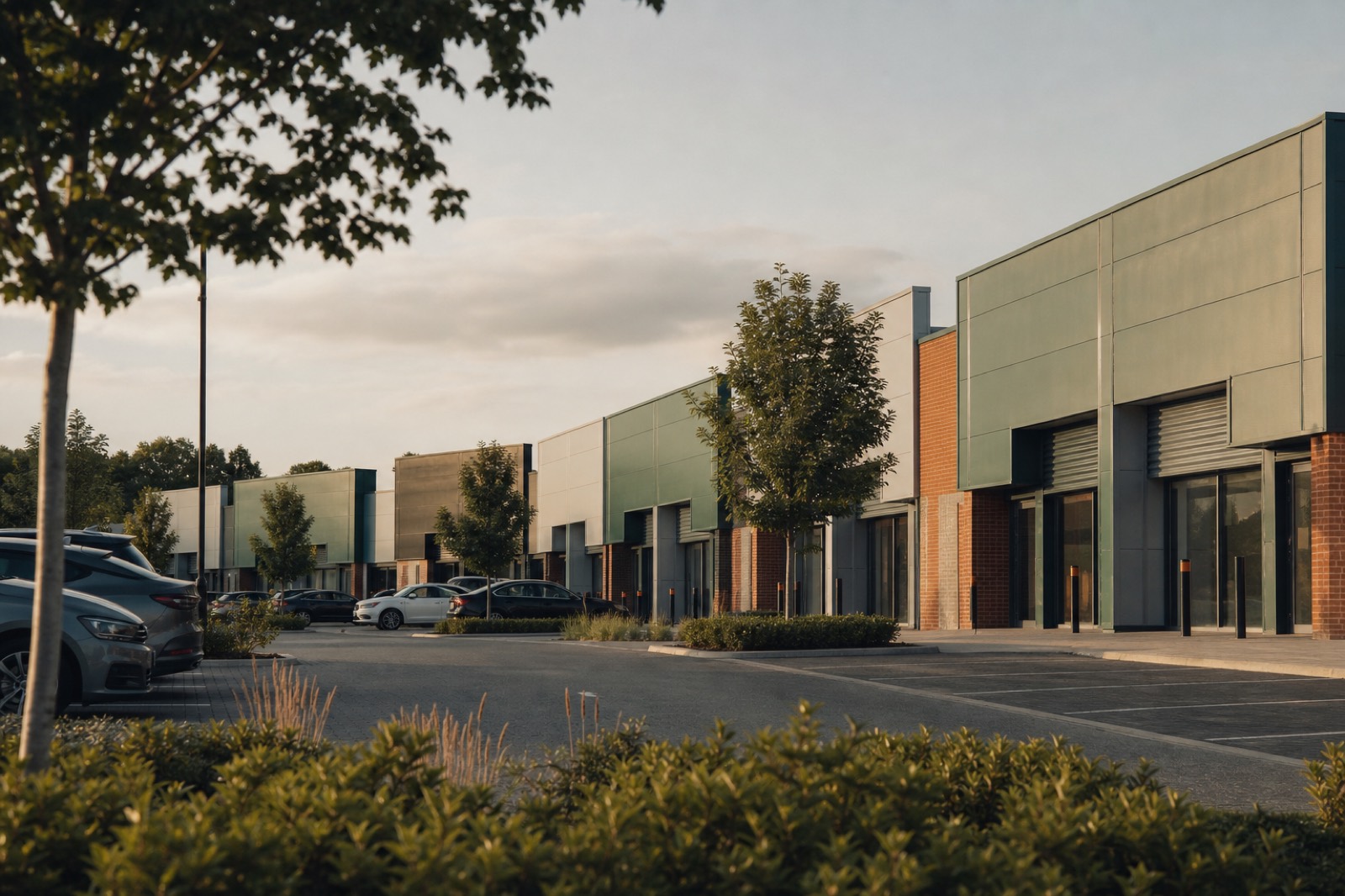
Retail parade finance
Finance for a row of shops with residential flats above, held as a single semi-commercial investment.

Financing retail parade with uppers
A retail parade with uppers is a terrace of ground-floor shops with residential flats above, usually owned as a single semi-commercial investment. It is a popular asset for investors because it spreads income across several commercial tenants and several flats, so a single void has limited impact on the whole. The building is funded with a commercial or semi-commercial mortgage sized on the combined rent roll, and it is often held in a portfolio alongside similar parades.
We arrange the finance and introduce you to lenders, we do not lend, and we cover the full range for a parade: a term mortgage to hold the rent roll, bridging to buy quickly or at auction, light or heavy refurbishment finance to relet vacant units or upgrade the uppers, development finance to add flats above, and bridge-to-let to refurbish then term out. On a parade, lenders assess the mix of retail tenants, the length and strength of the commercial leases, the residential void rate on the uppers, and the overall commercial-to-residential split. A diversified parade with a good spread of payable tenants is a resilient asset that lenders fund competitively, while a parade with several vacant units or a single dominant tenant in difficulty needs more careful placing.
Configurations we finance
- Terrace of shops with flats above on one title
- Corner parade with mixed retail and residential
- Neighbourhood parade with convenience and service tenants
- Part of a wider semi-commercial portfolio
Indicative terms
- Indicative rate6.5 to 8.5% a year
- Loan to valueUp to 70 to 75% of value
- Deposit25 to 30%
- Affordability125 to 140% ICR on whole rent roll
- Term5 to 25 years
Indicative only. Terms vary by lender, property and borrower and are not an offer of finance.
How we fund a retail parade with uppers
For a hold, we size a term loan on the whole rent roll, blending the commercial rents from the shops and the residential rents from the flats, stressed at an interest cover ratio of around 125 to 140 percent. A parade investment typically runs to 70 to 75 percent loan to value with a 25 to 30 percent deposit on a 5 to 25 year term. Where a parade is bought with vacant units, below value or at auction, semi-commercial bridging at about 0.70 to 0.95 percent a month completes quickly and funds works, exiting onto a term loan on the stabilised rent roll. Light or heavy refurbishment finance funds reletting and upgrades, and a scheme adding flats above the shops is funded by semi-commercial development finance on a loan to cost and GDV basis. Lenders value the diversification across multiple tenancies, so a parade with several independent income streams and modest voids is treated as lower risk than a single unit. The commercial proportion keeps the asset in semi-commercial territory and shapes which lenders compete.
Lender appetite for retail parades
Specialist and challenger banks including Shawbrook, InterBay Commercial, Allica, Cynergy Bank, Cambridge & Counties and Paragon fund a retail parade with residential uppers, attracted by the income diversification. Lenders look at the tenant mix, the lease lengths on the commercial units, and the residential letting on the flats above. A parade anchored by everyday-needs tenants such as a convenience store, pharmacy or takeaway, with the uppers fully let, draws the most competitive terms, while structural vacancy weighs on both value and leverage.
Exit and refinance options
A parade is a long-term hold asset, refinanced at the end of each term, commonly onto a semi-commercial remortgage to release equity from rental growth or active asset management. Where a parade is bought with vacant units or needs refurbishment to relet, semi-commercial bridging can fund the purchase and the works before a term loan takes over on the stabilised rent roll. Investors holding several parades often consolidate them under semi-commercial portfolio finance for a single facility and simpler reporting.
Finance structures that suit this sector
- Semi-commercial investment mortgageFor an investor holding the parade for rental income.
- Semi-commercial mortgageCore term loan across the parade's blended rent roll.
- Semi-commercial bridgingFunds a fast, auction or vacant-unit purchase before a term loan.
- Heavy refurbishment financeRelet vacant units or upgrade the uppers before refinancing.
- Semi-commercial development financeAdd flats above the shops on a loan to cost and GDV basis.
- Semi-commercial portfolio financeFolds multiple parades into one facility.
Finance a retail parade with uppers
A view on lenders and likely terms within one working day.
What drives a retail parade's economics
A retail parade with uppers spreads its income across multiple shop leases and several residential flats, so the valuation rests on a diversified rent roll rather than one tenant. Lenders capitalise the blended commercial and residential rent at a semi-commercial yield, stress it at an interest cover ratio of around 125 to 140 percent, and treat the spread of tenancies as a resilience factor. Structural vacancy, by contrast, weighs on both the value and the leverage.
Indicative retail parade mortgage rates
We arrange semi-commercial mortgages on a retail parade with uppers from 6.5 to 8.5 percent a year, to 70 to 75 percent loan to value with a 25 to 30 percent deposit over 5 to 25 years. A parade bought with vacant units can complete on semi-commercial bridging at 8.5 to 11 percent a year and exit onto a term loan once relet, and several parades can be consolidated under one portfolio facility.
Local commercial planning activity
Recent commercial planning records relevant to retail parade with uppers, drawn from local-authority data.
-
Jewellery Quarter, Vyse Street and Warstone Lane, Birmingham B18 6JT
Change of use of three existing light-industrial workshops to mixed Class E commercial / studio use, retaining historic frontages within the JQ conservation area
View on the planning portal →
Frequently asked questions
Can you get a mortgage for a retail parade?
Yes. A retail parade with residential uppers is funded by a commercial or semi-commercial mortgage, sized on the whole rent roll across the shops and flats. The income diversification across several tenancies tends to make the asset attractive to lenders.
How does the residential element affect the finance?
The flats above add a residential income strand that lenders blend with the commercial rents. A higher residential proportion can broaden the field of lenders, but where it passes roughly 40 percent of floor area or value the asset may be treated more like residential investment.
Are voids a problem on a parade?
A single void on a diversified parade has limited impact because income comes from several tenancies. Lenders are more cautious where several units are vacant or one dominant tenant is struggling, which affects both the valuation and the leverage offered.
Can I finance several parades together?
Yes. Investors holding more than one parade can consolidate them under semi-commercial portfolio finance, putting multiple buildings under a single facility with one set of terms and reporting.
Financing a retail parade with uppers?
Tell us about the property and we will come back with a view on lenders and likely terms.